Welcome to Session 3 of Module 01 in your medical billing training program. Building on the foundational concepts from Session 1 (key players and demographics) and Session 2 (PCP, specialist, referrals, and authorizations), this session focuses on one of the most practical and frequently used skills in billing: insurance verification and coverage understanding.
Before any claim is submitted, insurance verification helps confirm whether the patient is eligible for coverage, which services are covered, and what portion the patient will be responsible for. Mastering this process significantly reduces claim denials, patient dissatisfaction, and payment delays.
Chapter Overview: Insurance Verification and Coverage
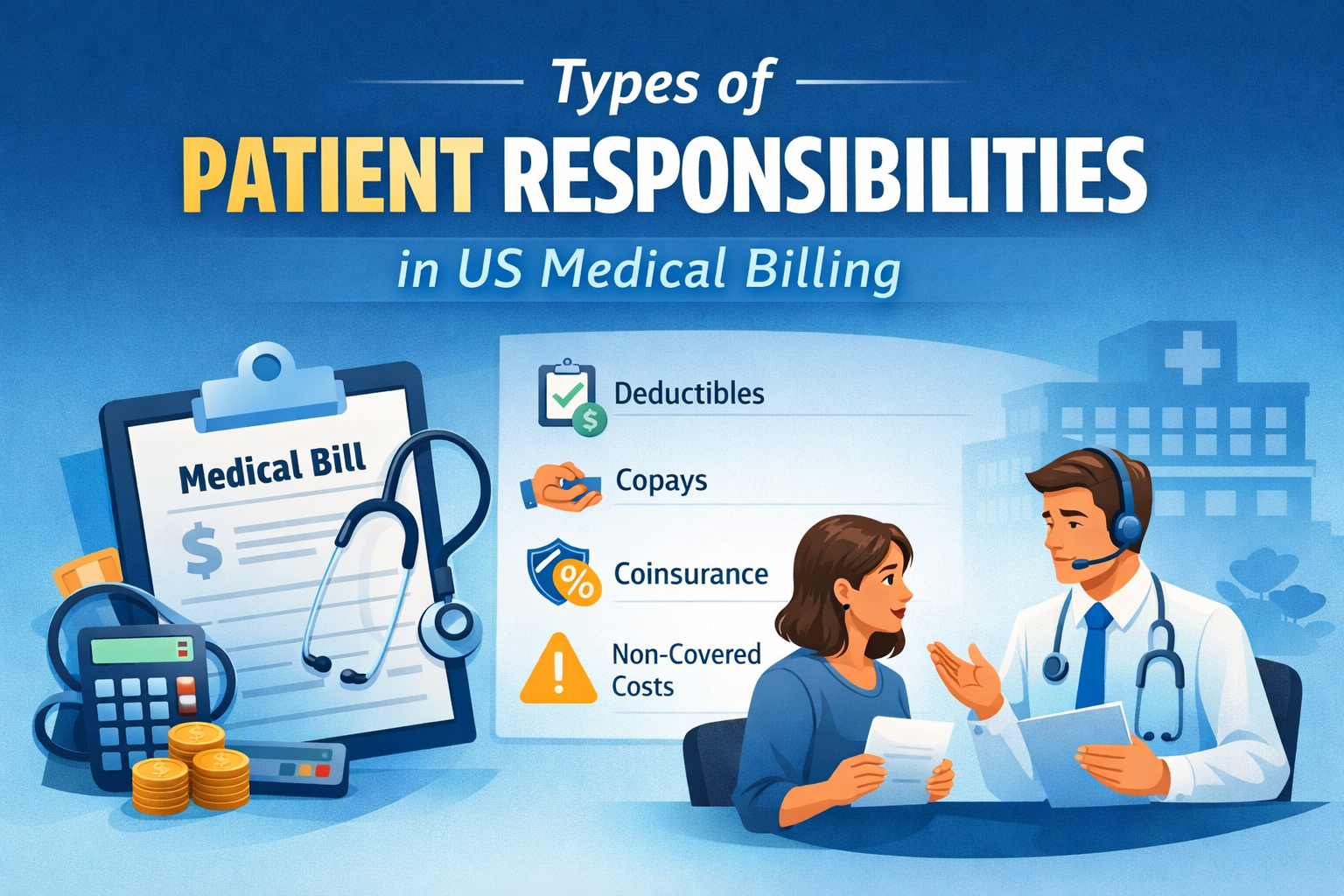
In this chapter, you will learn how to verify insurance, interpret coverage details, and identify key financial responsibilities such as deductibles, copays, and coinsurance. You will also understand why verification must be done before the patient’s visit or service.
Why Insurance Verification Matters
Insurance verification is essential because it:
- Confirms that the patient’s policy is active on the date of service
- Identifies which services are covered and which require authorization
- Clarifies patient responsibility (copay, deductible, coinsurance)
- Prevents claim denials due to eligibility problems
- Reduces surprise bills and improves patient satisfaction
Understanding Key Financial Terms in Medical Billing
1. What Is a Deductible?
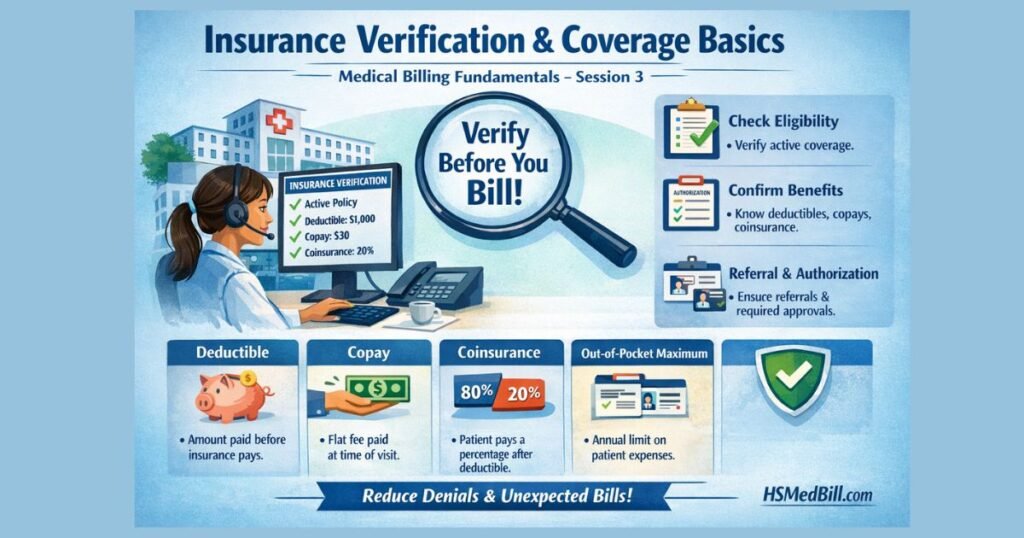
A deductible is the fixed amount a patient must pay out of pocket for covered healthcare services each year before the insurance company starts paying its share.
Key Points:
- Resets annually (usually on calendar year or plan year)
- Applies to many services such as hospital stays, surgeries, and imaging
- Some services (like preventive care) may be covered before deductible
- A higher deductible often means a lower monthly premium
Example:
A patient has a yearly deductible of 1,000. If they receive a covered service costing 600 early in the year, they must pay the entire 600. The remaining deductible is 400. Once they meet the full 1,000, the insurance starts paying according to the plan rules.
2. What Is a Copay?
A copay (copayment) is a fixed amount a patient pays at the time of service for specific healthcare visits or prescriptions.
Key Points:
- Usually a flat fee (for example: 20 for a PCP visit, 50 for a specialist)
- Often applies to office visits, urgent care, and some prescriptions
- Typically due at check-in or before the patient sees the provider
- Does not usually count towards the deductible, but often counts toward the out-of-pocket maximum (varies by plan)
Example:
A patient’s plan lists a 30 copay for primary care visits and a 60 copay for specialist visits. When they see their PCP, they pay 30 at the front desk regardless of the full charge for that visit (as long as it is a covered service).
3. What Is Coinsurance?
Coinsurance is a percentage of the allowed charges that the patient pays after meeting the deductible. Unlike copays, coinsurance is not a fixed amount.
Key Points:
- Expressed as a percentage (for example: 80/20, 70/30)
- Insurance pays one portion and the patient pays the remainder
- Applies after the deductible is met
- Often used for hospital stays, surgeries, imaging, and other high-cost services
Example:
A plan has 80/20 coinsurance after a 1,000 deductible.
- Allowed amount for a surgery is 10,000
- Patient has already met their deductible
- Insurance pays 8,000 (80%)
- Patient pays 2,000 (20%) as coinsurance
4. Out-of-Pocket Maximum
The out-of-pocket maximum is the maximum amount a patient will pay in a year for covered services (including deductible, copays, and coinsurance, depending on plan rules). After this amount is reached, the insurance pays 100% of covered services for the rest of the year.
Key Points:
- Protects patients from extremely high medical expenses
- Includes patient’s share such as deductible, copays, and coinsurance (usually)
- Resets annually
Example:
A patient’s plan has:
- 1,500 deductible
- 20% coinsurance
- 6,000 out-of-pocket maximum
Once the patient has paid a total of 6,000 for the year (in deductible, copays, and coinsurance), the insurance covers remaining allowed charges at 100%.
The Insurance Verification Process
5. When and How to Verify Insurance
Goal:
To check whether a patient’s insurance is active, what services are covered, and what financial responsibility the patient will have before services are provided.
When to Verify:
- Before the first visit for new patients
- Before every visit for high-risk plans (HMO, Medicaid, marketplace plans)
- Before major services like surgery, imaging, or procedures
- When insurance card changes or patient reports new employer/plan
How to Verify Coverage:
- Gather Patient Information:
- Full name and date of birth
- Insurance ID and group number
- Payer name (e.g., UHC, Aetna, BCBS)
- Policy holder (guarantor) information
- Relationship to subscriber
- Use One or More Verification Methods:
- Insurance company website/portal
- Real-time eligibility tools (clearinghouses, practice management system)
- Phone call to payer’s customer service or provider line
- Electronic data interchange (EDI) eligibility transactions
- Confirm Key Details:
- Is the policy active on the date of service?
- Is the provider in network or out of network?
- Is a referral required from PCP?
- Is authorization required for the service?
- Deductible, copay, and coinsurance amounts
- Any limits (visit caps, frequency limits)
- Any exclusions or waiting periods
6. Information to Document During Verification
You should always document verification results clearly in the patient’s record or billing system.
Essential Items to Record:
- Date of verification
- Name of insurance representative or portal used
- Call reference number (if by phone)
- Effective and termination dates of coverage
- Plan type (HMO, PPO, POS, etc.)
- PCP requirement and PCP name (if applicable)
- Referral requirement for specialist
- Authorization requirements for specific services
- Deductible amount and amount already met
- Copay and coinsurance details
- Benefits for specific service (e.g., physical therapy, imaging, surgery)
Insurance Verification and the Revenue Cycle
7. How Verification Connects to the Billing Workflow
Insurance verification ties together many steps you have already learned.
From Session 1:
- You collect accurate demographics and insurance information at registration.
- Incorrect details (wrong ID, wrong payer, wrong guarantor) cause denials later.
From Session 2:
- You confirm whether referrals and authorizations are required.
- If required but not obtained, claims will likely be denied even if the patient has active coverage.
In Session 3:
- You verify eligibility, benefits, and patient responsibility before service.
Complete Simplified Workflow:
- Patient scheduled for appointment
- Front office collects demographics and insurance details
- Billing/eligibility team performs insurance verification
- If needed, referral and authorization are obtained
- Patient informed of expected financial responsibility
- Service is provided
- Claim is created and submitted with correct payer, auth, and benefits
- Payment posted and patient billed for remaining balance
Common Coverage Scenarios
Scenario 1: Active Coverage with Deductible Remaining
Situation:
A patient has active coverage, but has not met their annual deductible.
Verification Result:
- Plan active, provider in network
- No referral required, no additional authorization for an office visit
- 1,000 deductible not yet met
- Visit subject to deductible
Billing Impact:
- Insurance processes claim but applies most or all of the charge to the patient’s deductible
- Patient receives a bill after insurance processes the claim
- Staff should explain this possibility at or before the visit to avoid surprise bills
Scenario 2: Inactive Coverage
Situation:
Patient presents an insurance card that looks valid, but coverage actually ended last month.
Verification Result:
- Policy shows terminated as of a prior date
- No active coverage on date of service
Billing Impact:
- If service is provided assuming coverage is active, claim will be denied for ineligibility
- Patient becomes responsible for the full amount
- Best practice is to:
- Inform the patient coverage is inactive
- Ask for updated insurance information
- Offer self-pay options if they choose to proceed
Situation:
Patient with an HMO plan wants to see an orthopedist for chronic knee pain.
Verification Result:
- Plan type: HMO
- PCP required, and PCP must issue referral
- Specialist visit requires authorization before the appointment
- Specific copay for specialist visit, plus possible coinsurance
Billing Impact:
- Without referral and authorization:
- Claim may be denied
- Patient could be responsible for full charge
- Staff must coordinate with PCP and payer before scheduling or confirming the appointment.
Scenario 4: Out-of-Network Provider
Situation:
Patient wants to see a specialist who is not in their insurance network.
Verification Result:
- Provider is out of network
- Plan may:
- Not cover out-of-network at all (especially HMO), or
- Cover at a reduced rate with higher patient responsibility (PPO, POS)
Billing Impact:
- Patient may face higher deductible, coinsurance, or non-covered charges
- Staff should:
- Clearly explain out-of-network implications
- Document that patient understands they may owe more
- Offer alternative in-network providers if appropriate
For Front Office and Billing Teams
- Verify Early
- Perform verification before the appointment whenever possible.
- For same-day bookings, verify as soon as scheduling is done.
- Use a Standard Checklist
- Create a verification form or checklist with all key items (eligibility, benefits, plan type, PCP, referral/auth requirements, financial responsibility).
- Double-Check High-Risk Plans
- Be extra careful with HMO, Medicaid, marketplace, and limited-benefit plans.
- These often have strict rules and more frequent changes.
- Always Document
- If it’s not documented, it’s as if it didn’t happen.
- Documentation protects the practice if there is a later dispute.
- Communicate Clearly with Patients
- Provide an estimate of what the patient may owe.
- Explain that final responsibility depends on how the payer processes the claim.
- Encourage patients to contact their insurance for detailed questions.
- Collaborate with Clinical and Billing Staff
- Work with providers to plan for services that need authorization.
Inform billing team about special coverage situations identified during verification.
Common Errors in Insurance Verification and How to Avoid Them
Error | Impact | How to Prevent |
Verifying under wrong payer | Claim sent to wrong insurance, denial | Confirm payer name and type carefully |
Not checking effective dates | Service provided during lapse, denial | Always confirm active coverage on date of service |
Assuming last visit coverage still active | Surprise denials when coverage changed | Verify before each visit for high-risk plans |
Ignoring referral/auth requirements | Denial even with active coverage | Always check referral/auth needs during verification |
Not documenting call details | No proof in disputes | Record date, time, rep name, and reference number |
Misunderstanding copay vs coinsurance | Wrong patient estimate, confusion | Clarify definitions and confirm with payer when unsure |
Key Takeaways from Session 3
By the end of this session, you should understand that:
- Insurance verification is not optional; it is a critical step before providing services.
- Deductible, copay, coinsurance, and out-of-pocket maximum determine what the patient must pay.
- Different plan types (HMO, PPO, POS, etc.) have different rules for referrals and authorizations, which affect verification.
- Proper verification reduces claim denials, improves cash flow, and protects patients from unexpected bills.
- Documentation and clear communication are essential to a smooth revenue cycle.